LIFX Smart Dimmer Switch
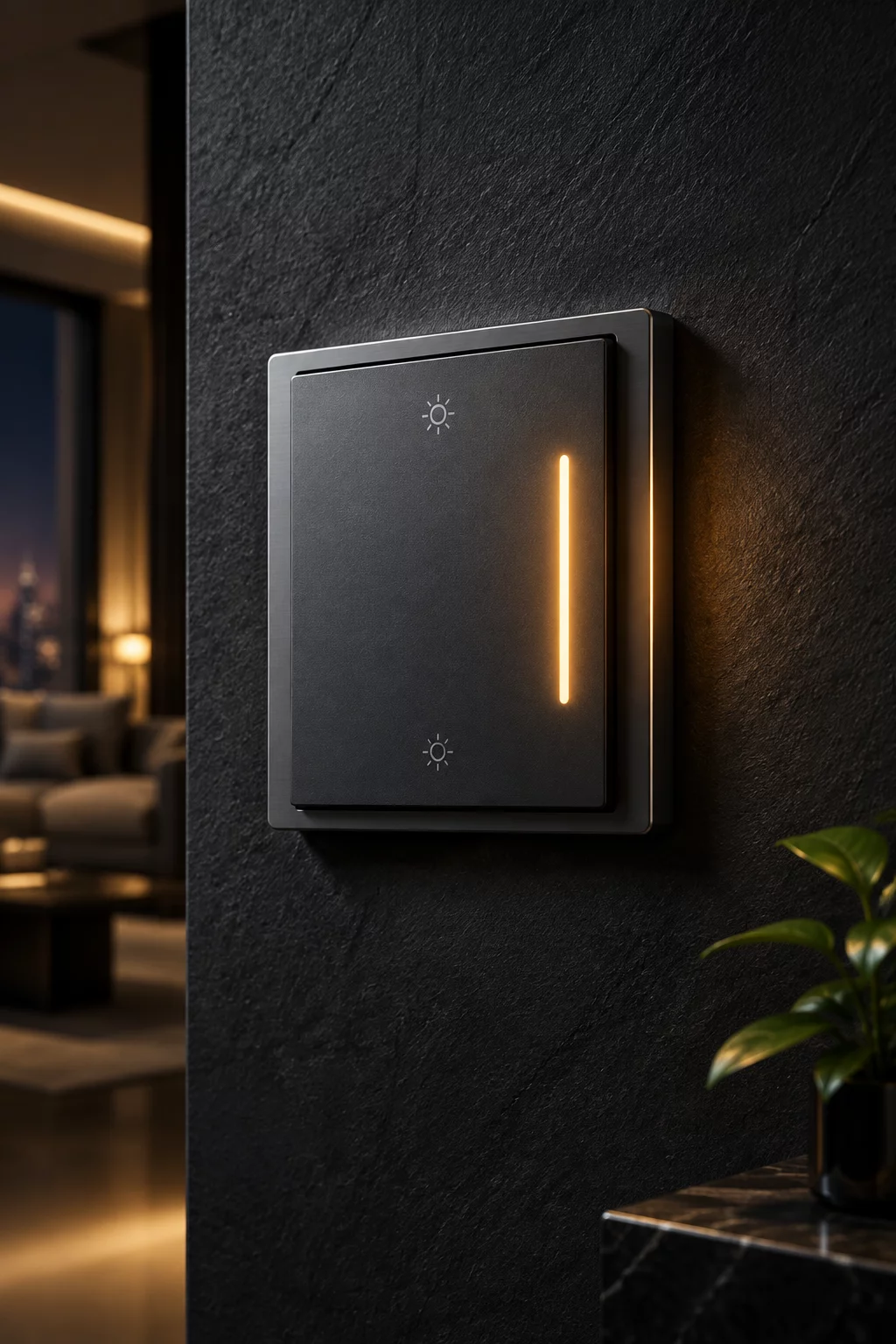
Four-button programmable smart wall switch engineered for standalone local regulation and dynamic ambient lighting control.
Smart dimmer with four programmable buttons and local execution. Built to regulate traditional fixtures alongside smart bulbs with zero-cloud dependency and millisecond tactile response.
Hardware Specifications
| Communication Protocols | Wi-Fi 802.11 b/g/n (2.4 GHz), Matter over Thread ready, Local HTTP API |
| Operational Voltage | 100–240V AC, 50/60 Hz |
| Max Continuous Load | 250W Trailing Edge LED / 600W Resistive Incandescent |
| Enclosure Material | Flame-Retardant Polycarbonate (UL94 V-0) with Matte Finish |
| Operating Temperature | 0°C to +40°C (32°F to 104°F), 10%–90% Non-Condensing Humidity |
System Topology & Architecture
Equipped with dedicated onboard memory and an autonomous logic processor, the dimmer executes lighting schedules and multi-tap scenes entirely on-device. This localized setup ensures instantaneous feedback even during intermittent network dropouts while safeguarding user privacy through encrypted direct mesh channels.
Mesh Relay Node
Acts as an active protocol repeating station extending localized IoT range across domestic switchboards.
Zero-Crossing Sync
Prevents inrush voltage arcs on capacitive driver circuits during high-frequency switching operations.
Local Key Storage
Stores network security tokens on hardware-isolated non-volatile microchips for offline safety.
Installation Guidelines
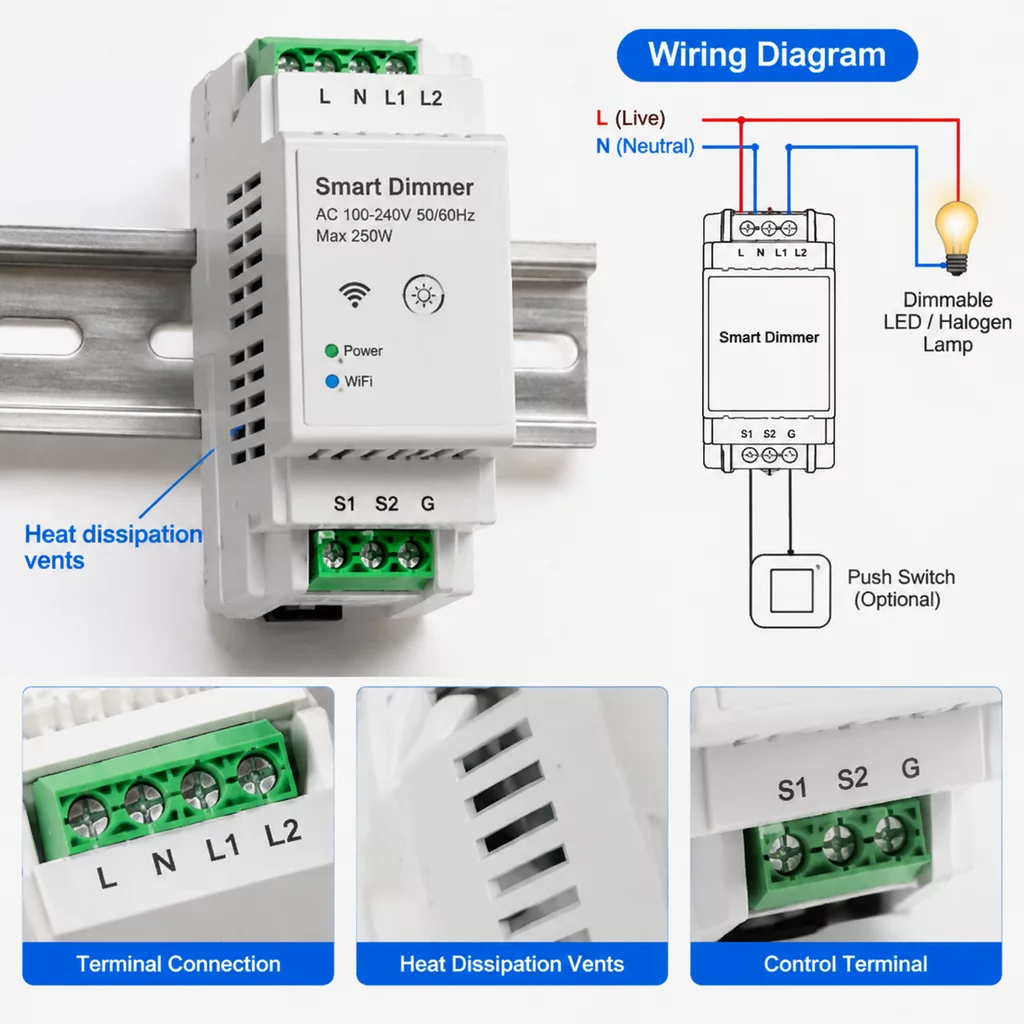
Designed for installation within standard rectangular wall backboxes with a minimum internal clearance of 35mm. Neutral wire connection is required to supply continuous logic board power and keep illuminated LED capacitive indicators active.
- 01Isolate line breaker upstream prior to touching any backplate electrical terminals.
- 02Connect neutral and phase wiring following standard 1.5mm² solid-core copper recommendations.
- 03Push configuration button once to broadcast commissioning beacon over localized radio mesh.
Request Hardware Dispatch
Submit project requirements to arrange direct hardware allocation and deployment specifications.
Related Hardware Modules